
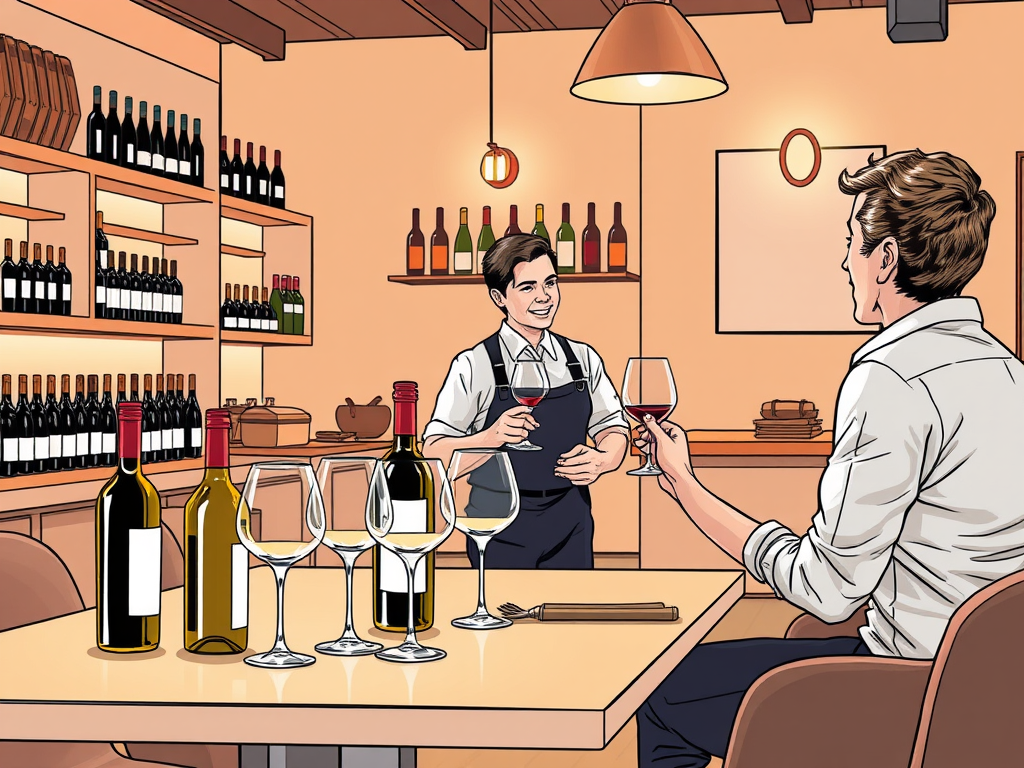
We call it a Tasting Room, when it’s really a Sales Room. Why is that?
After the repeal of Prohibition in 1933, wineries re-opened in an environment where the government was highly suspicious of any and all alcohol sales. On-premise consumption was restricted and considered the purview of saloons, which were vilified during the years of Prohibition. So, to comply with laws and distinguish themselves as places of refined moderation, wineries leaned into “tasting,” not drinking. The Tasting Room became the winery’s sales room.
Over the decades, tasting rooms have become places of hospitality, education, and increasingly, dinner (or lunch). Along the way, the primary role of the tasting room—to form a connection with the consumer for the purpose of selling wine—got lost.
Now, I recognize that I’m being hyperbolic here. In the contracting market we’re living in, too many wineries are focusing only on the hospitality aspect. They need to lean into sales, specifically multi-bottle purchases in the tasting room and wine club conversions. I see this not only in wineries I visit as a consumer, but in every winery I work with.
Focus on the Easiest Sales
The wine market is contracting. We know this. We’ve been living it for a while now. Direct-to-consumer shipments are down, tasting room visits are down, and discretionary spending is tightening. Add to that, it’s a crazy time in the world right now. While the economic volatility will stabilize over time, there has also been a demographic shift that is here to stay. These are realities wineries cannot control.
What wineries can control is what happens in their own tasting room with the consumer who chose to be there.
When someone walks into your tasting room, they have already made a choice—and they chose you. They went to your website, looked at the wines you make and your prices. They drove to you and may even have booked a reservation. And now they are in your tasting room, glass in hand. Happy. Sipping your wine. From a sales perspective, there is no warmer lead in the entire business—maybe in any business. They are waiting for you to sell them wine.
Yet many wineries continue to treat the tasting room as a hospitality venue where we also sell some wine—if you want and if you ask. They leave the most valuable, and the easiest, sales opportunities underdeveloped.
Hospitality Is the Entry Point. Sales Are the Outcome.
Over the last decade, wineries have become very good at hospitality, and it shows. Average order values have more than doubled since 2012 in most regions of the U.S. According to the WISE Tasting Room Benchmark Report, guest satisfaction consistently scores in the “Very Good” range across the industry, reflecting major investment in culture, staff training, and crafting the customer experience.
But that same data shows a persistent gap:
While more wineries are asking for the order, fewer than 40% are effectively selling the wine club during tasting room visits.
This matters. The wine club is not a “nice add-on.” It is the financial backbone of small to midsize wineries. Every time I conduct a business analysis for a winery that is not seeing consistent profits, I find they are well below average in wine club conversions. Every single time. And growing their wine club is often what moves them from operating in the red to generating consistent profits.
Why Wine Club Conversions Are Critical to Winery Profitability
According to the 2026 Direct-to-Consumer Wine Shipping Report, wine club shipments represent 39% of all DTC sales by value. That’s four out of every ten dollars shipped directly to consumers coming from club sales. The percentage increases even more when combined with follow-on orders from wine club members outside of regular shipments.
Why is this so important right now?
When demand softens, the most resilient revenue comes from repeat buyers—read “club members.” It comes from the buyers who already chose you, who know you, and already want your wine. Wine clubs stabilize cash flow, smooth out seasonal drops, and create predictable shipment cycles—exactly what wineries need during contractions.
Failing to actively sell the wine club in the tasting room isn’t just a missed opportunity. It is leaving your most reliable revenue stream on the table.
a missed opportunity. It is leaving your most reliable revenue stream on the table.
So, What Do You Do?
The highest-performing wineries do not choose between hospitality and sales. They integrate them. They make wine club conversions part of the experience.
Selling the wine club should feel like:
- Guiding guests toward what they already enjoy
- Helping them access wines they just said they love
- Offering convenience, priority, and belonging
- Extending the relationship beyond today’s visit
This requires intention, training, and leadership. Not harder selling—earlier, clearer, more confident selling. Selling that sounds more like a conversation. One that begins when the first wine is poured and is woven throughout the tasting experience, culminating in an ask.
It is not a conversation you start at checkout. It is a conversation that begins when they walk through your door and continues after they leave.
The Bottom Line
As the market contracts, wineries cannot afford to rely on hope, traffic, or volume to carry revenue. It can’t be business as usual.
Your tasting room is not just a place to host people. It is your highest-leverage sales environment. It’s where you convert visitors into believers—believers who purchase regularly for years.
When fewer than 40% of wineries consistently sell the wine club—yet wine clubs represent 39% of all DTC sales—the math is clear. You cannot afford to hope consumers will choose you. You have to sell them your benefits.
And these are the easiest sales you will ever make. You are selling to the people who already chose you.
With training and intention, you can turn your tasting room into a sales room that supports a profitable winery.
If your wine club is not generating consistent, predictable revenue, the issue is rarely traffic alone. It is usually found in the mix—how much revenue is coming from one-time purchases versus repeat buyers, how effectively club members are retained, and how your DTC channels are working together. Before changing tactics, it is worth analyzing the composition of your sales. The numbers will tell you where the real opportunity lies. I’m happy to help you. Contact me.
Leave a Reply