
Building a winery is complex. Building a profitable winery takes a structured system.
Starting a winery is one of the most exciting ventures an entrepreneur can undertake. It is also a complex, capital-intensive process full of pitfalls for the unprepared. I’ve done winery startup consulting for 27 years. People who contact me often have the vision but they often come from careers outside the wine industry. They quickly discover the steep learning curve involved in navigating the complex issues in starting a winery. Ultimately, they know the business is difficult and expensive and want to get it right. The decisions determining long-term profitability are made in the first eighteen months—long before a bottle is sold, the tasting room opens, or even the building goes up.
I work with founders, families, and investors from the earliest planning stage through the launch and into ongoing operations. The work I do is not cheerleading and it is not a rubber stamp. It is a rigorous analysis bringing together a background in engineering, project management, financial forecasting, business management and winemaking. I bridge the gap between passion and profitability by filling the knowledge holes and guiding you through every stage of building your winery. I help you make confident decisions that protect your investment and set your brand up for long-term success.
What the engagement covers
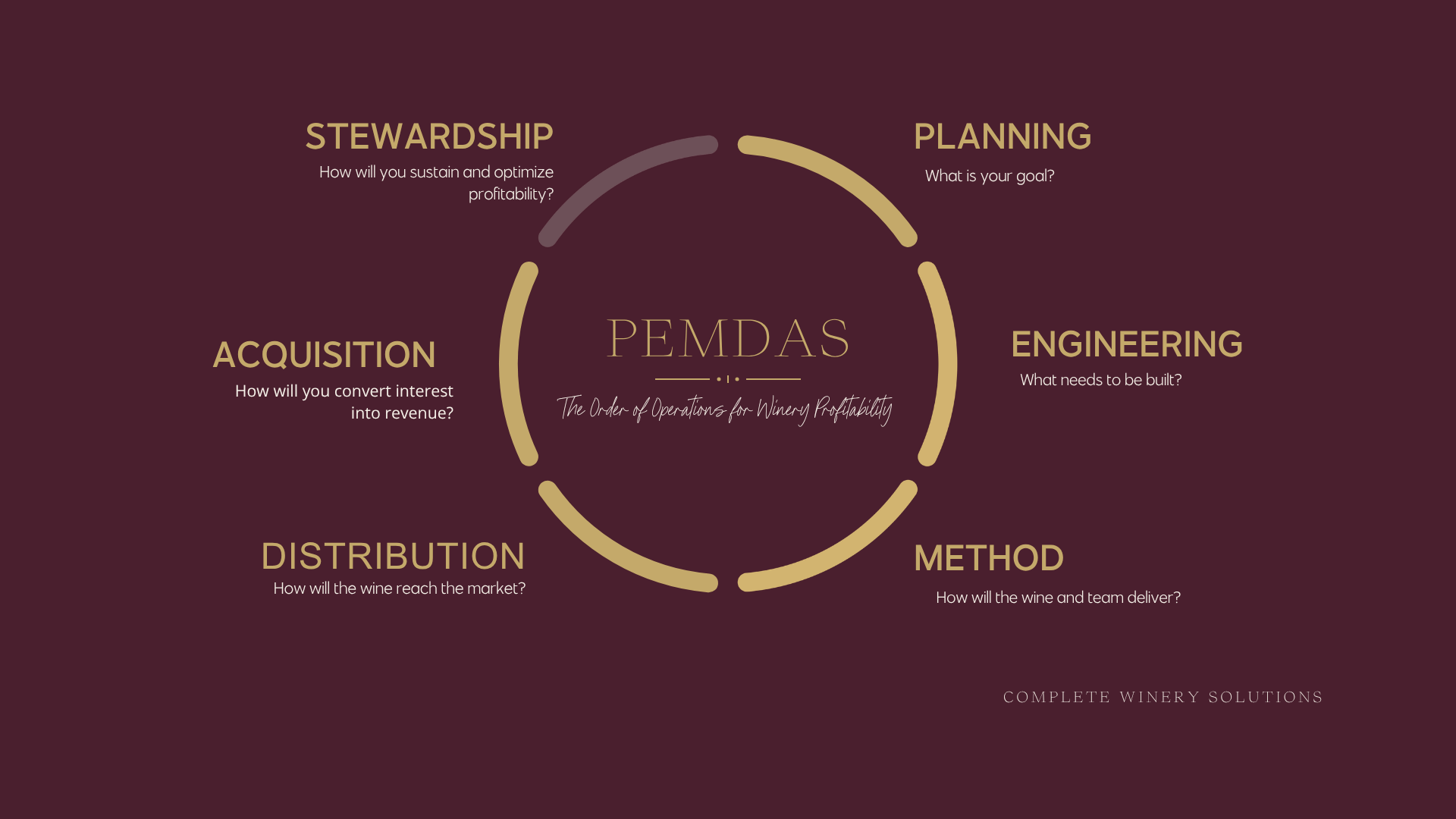
A startup engagement runs from concept through sales-ready operation. Each stage, from planning through method, is connected. I’m with you from concept to sales to ensure a successful winery.
Planning
The financial foundation
The winery financial model is built first, because every decision that follows depends on what it shows. It covers startup capital, operating costs, channel-level revenue forecasts, and fully loaded cost per case at your target production. Some clients arrive with a model already in hand; I review it and close the gaps. From there comes the full winery business plan that is funding ready.
Engineering
The design and Build
I design production and operational layouts: crush pads, tank sizing, barrel storage, and bottling sized to your production targets and wine mix. Every specification comes with direct quotes from qualified regional suppliers who can deliver and service the equipment — numbers you can sign a contract against. I work with your architect and general contractor to make sure electrical, power, and cooling systems all meet your needs so you can run an efficient winery. Project management sequences the build, licensing, and procurement so the timeline and budget hold.e to bottle.
Method
The Brand market and team
This is how the winery goes to market and who runs it. Winery pricing strategy, brand positioning, packaging, and naming all have to align with the vision you are building toward and the margins the model requires. I help you define the team, including compliance specialists, and structure the tasting room and DTC sales operation for profitability from the start. The work does not stop at the plan — it continues through the build, the licensing, and the first selling season.
Why it matters to get this right
The most common and costly startup mistake is building backwards: design the winery and then try to figure out how to sell enough wine to pay for it. The PEMDAS framework runs the sequence in the other direction. You plan the revenue, build the model, and then design the operation to support it. That order is not accidental. It is the reason the framework is named what it is.
Having built startup plans and financial models for wineries across the world, I know what the numbers look like when a project is viable and when it is not. I will tell you which one yours is, and I will show you the work that leads to that conclusion.

Client Work: New Jersey Estate Winery
This client had the three things that make a startup winery work: a clear vision, the drive to execute it, and the experience to understand what running a complex business actually demands. He had built and operated successful businesses across multiple industries, including restaurants, and he knew what he did not know. What he did not yet have was a clear picture of what his vision would actually cost to build, or what it would take to make it profitable. That is what I provide.
The plan was an estate vineyard, winery, and restaurant — a destination where families could have a premium experience, not just a tasting. That combination is more complex to build and operate than a standalone tasting room, and the financial model had to reflect both the opportunity and the real cost of delivering it.
I started with the vineyard, because the model was built around what the site will actually grow. The varietal selection was driven by this specific location — climate, soil, and microclimate — mapped against the production targets and winemaking vision. Getting the grape mix right at the beginning determines everything downstream: cost per case, pricing, tasting room economics, and whether the whole operation is viable. The winery design had to serve two purposes at once: run efficiently for the production program he was building, and support VIP tours that could showcase wine quality in a region where the industry is small but growing and differentiation matters. Those goals require deliberate design to achieve together.
Several years later, the winery produces award-winning wines, runs a full VIP tour experience, and operates the restaurant on the historic farm the owner envisioned from the start.